CHELUN OU歐哲綸
Transcript · Tapes 01–03 · Subject: Chelun Ou, Director & Executive Producer

I build the production path
when there isn't one.

Fifteen years, 200+ directed works and 170+ end-to-end productions — commercials, documentaries, music videos, installations, live events, and AI-assisted products — for Netflix, NIKE, Uber Eats, IKEA, and 7-ELEVEN, from a three-person core that scales past a hundred when the work demands it.

Taiwan's first One Show Gold Pencil · D&AD Wood Pencil · Clio Bronze · top music video 50M+ views
The short version
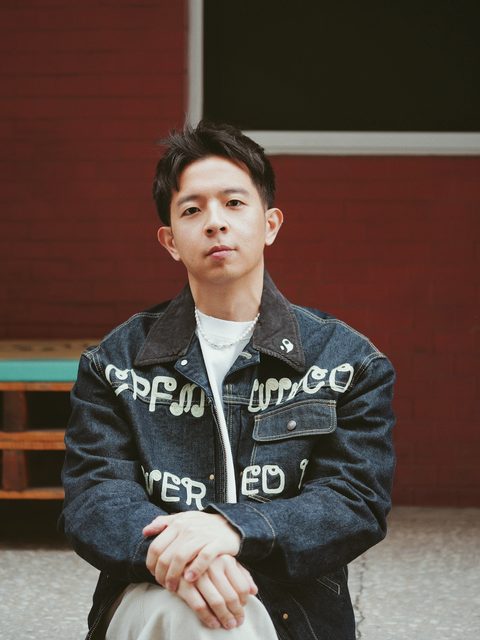
Chelun Ou
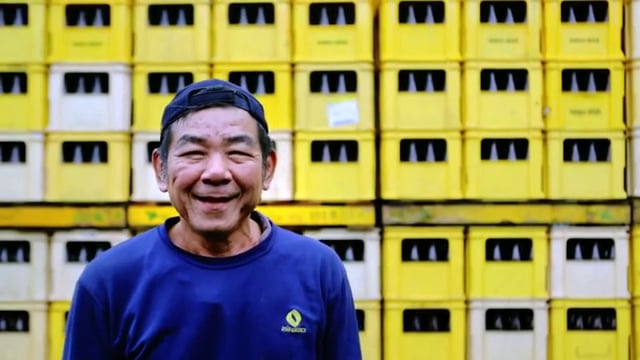
File photo
  • SubjectChelun Ou — director & executive producer · founder, Ouchelun Films
  • EducationB.A. in Drama and Theatre, National Taiwan University — Directing and Acting
  • Body of work200+ films directed · 170+ produced end to end · 5 with more than 10M views · full filmography
  • Formatsfilm · photography · live events · installations · AI-assisted products
  • RecognitionTaiwan's first One Show Gold Pencil (2016) · D&AD Wood Pencil · Clio Bronze (2018)
  • VenturesCo-Founder, Morpho · Founding Member, The Weekend Club (40,000+ members)
  • CurrentAcer 50th Anniversary Global Campaign — teaser now live
  • Contactouchelun@gmail.com · LinkedIn

— TAPE 01 —
[00:00:14]
Let's start simple. Who are you?

Someone who thinks by arguing with himself.

On paper: a producer and director from Taipei. Fifteen years, two hundred-plus commercials and music videos — most of them produced end to end by my own studio — a core of three that scales past a hundred when the film demands it — for Netflix, NIKE, Uber Eats, 7-ELEVEN, and Warner, Sony, and Universal Music. Then four years of building startups. The two halves make more sense together than they sound.

[00:03:40]
Two hundred films. Which ones matter?
[without hesitation]

Eight.

What Is Happiness — Cathay Financial Holdings brand documentary
Cathay Financial Holdings — What Is Happiness?
2012 · The annual brand documentary of Taiwan’s largest financial group. One camera, a five-person crew, two thousand strangers, one question. Field direction and camera.
Where the whole method started
Netflix Taiwan Lunar New Year campaign
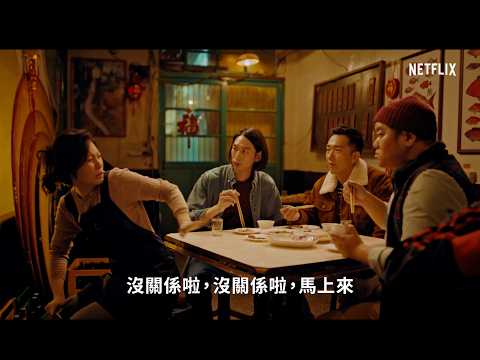
Netflix — Lunar New Year Campaign
2019 · 我想團劇 for Netflix Taiwan — made for people who couldn't make it home for Lunar New Year. A rare large-scale project where everything aligned: actors cast for fit rather than fame, a crew I trusted, and a budget that supported the craft. More than 650,000 views within days of release.
The one where everything aligned
Xiao Yu — It Ain't Easy music video, black-and-white frame
Xiao Yu — It Ain’t Easy
2018 · Music video, Warner Music. This video was never on the call sheet. During a break while filming So-Called Love, Xiao Yu told me about a song he had written after the killing of a young child shook Taiwan. Its lyrics moved among the victim, the perpetrator, and society, but no video was planned. I listened to the song and asked the crew if they would help. They gave me fifteen minutes, and we filmed one performance with no additional budget. In the edit, I used his performance, color, and typography to carry the shifts in perspective. The video passed 2.5 million views, and the song found its audience.
The one we found
Xiao Yu — So-Called Love music video title frame
Xiao Yu — So-Called Love
2018 · Music video, Warner Music. Shot the same day as It Ain’t Easy — this is the planned film; the other was found in a conversation. 30M+ views.
The one we planned
7-ELEVEN Rhythm of Love Wall — the applause wall from the launch film
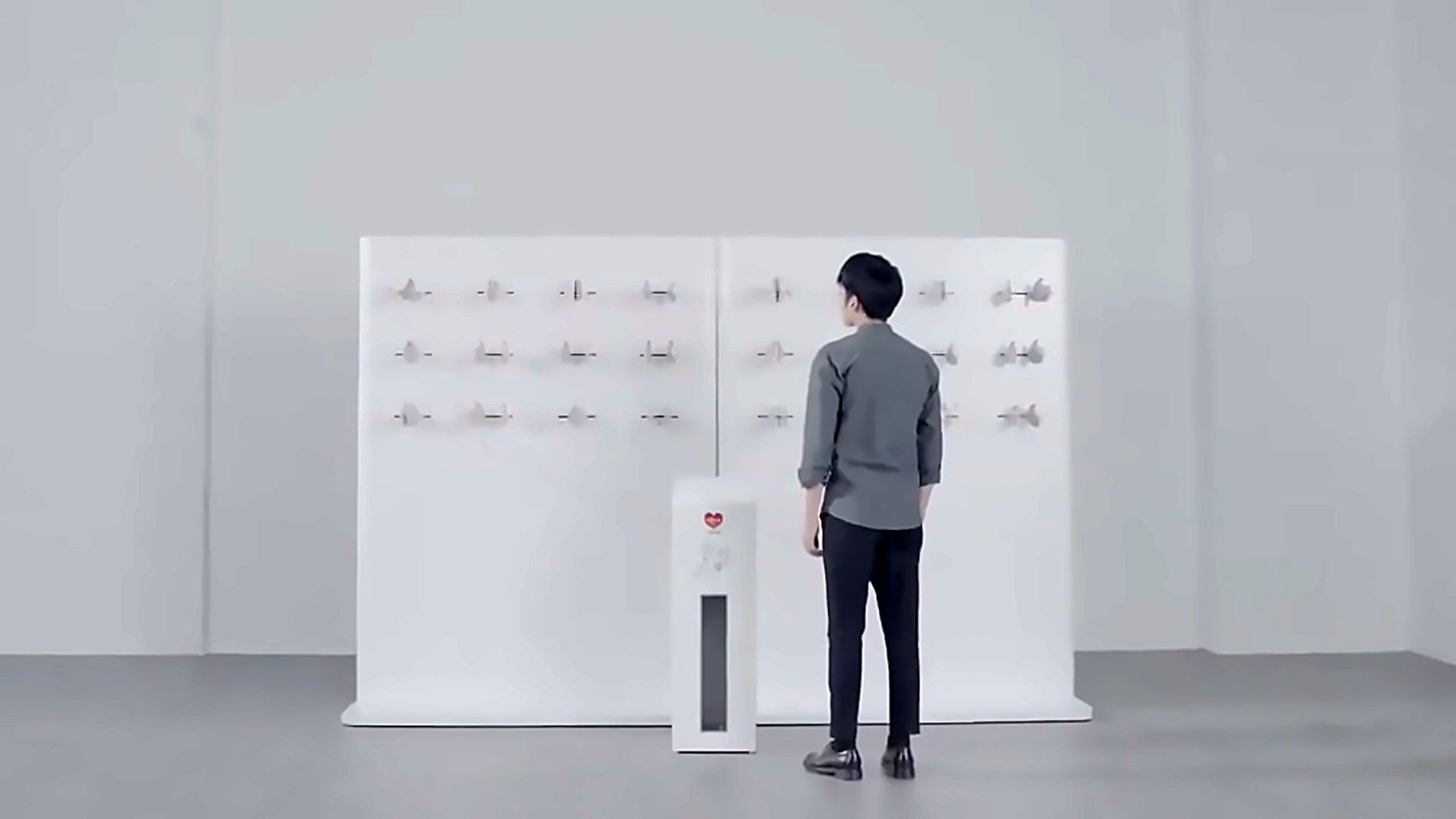
7-ELEVEN — Rhythm of Love Wall
2017 · Campaign film for the interactive donation installation, with ADK Taiwan and Whatever / PARTY New York. The campaign drew 86,500 visitors in two weeks and lifted store traffic 37%.
D&AD Wood Pencil · Clio Bronze
Accusefive — Finally music video
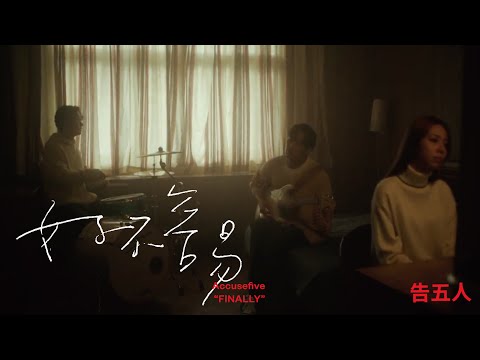
Accusefive — Finally
2021 · Music video for one of Taiwan's biggest bands. Fifty million views and counting: proof that some things you make simply travel.
50M+ views
Mixer — Loveholic music video
Mixer — Loveholic
2021 · Music video. A rescue project after the label rejected an earlier version. We reshot the video, and it helped carry the song — and the band — to a wider audience.
The rescue
Acer 50th anniversary teaser
Acer — 50th Anniversary Teaser
2026 · Global campaign with Ogilvy Taiwan — creative and strategy lead, director, and executive producer. Secured the assignment through a fast-turnaround competitive pitch as the sole external creative lead. Used separate AI-assisted workstreams to challenge the strategy and creative direction before making the final call. The teaser is live; the full film shoots in August 2026, followed by post, approvals, and global delivery.
Teaser live · shooting August 2026
[00:09:12]
Besides film, you've apparently been busy building things. Tell me.

The Weekend Club — weekend brunches with strangers, no profiles, no swiping. I'm a founding member. An AI-assisted matching system decides who sits together — and much of its logic began as patterns I noticed at the tables and worked with engineers to turn into scoring signals and grouping rules. In our home market, nine in ten guests say they would recommend it. It grew from a Google Form into a 40,000-member platform now operating across Taiwan and seven international cities: Kuala Lumpur, Perth, Brisbane, London, Hong Kong, Singapore, and Los Angeles.

The Weekend Club website homepage — Brunch with 5 new friends on the weekend
The Weekend Club, today — follow along on Instagram

My job is the integration. I led creator partnerships end to end — selection, budgets, briefs, and terms, across paid, gifted, and exchange models — alongside our Google and Meta brand-awareness campaigns. And I own every member-facing email in a lifecycle system I initiated: post-event feedback response rose from roughly one-third to 73.4% following the backend rollout.

[00:14:30]
You had a good film career. Why walk away — twice?
[long pause]

Every few years I ask myself the same question: is this as good as it gets? At the production company, I realized the path ahead was not the one I wanted — so I became a director. Ten years and a good living later, I asked again — and went to build startups.

I co-founded Morpho, a donor-led giving platform — donors posted what they wanted to support, and people applied, so no one had to perform their hardship to be helped. It served real people and then failed on unit economics, partly because I refused to make generosity a rich person's product. The decision I'm proudest of is the one that killed it. The second is The Weekend Club — the one I've just shown you. I'm still in it.

Film taught me to find the story. Startups taught me what it costs to be wrong.

[00:19:46]
And now AI. Really?
[immediately]

Fair. Here's what actually happened: this February I took on a pitch for Acer's 50th-anniversary film, with a timeline tight enough to force a different process. I didn't ask an AI to write it. I built a debate room: separate threads for strategy, creative development, pitch preparation, and review. I kept them apart so each could challenge the assumptions and output of the others. What survived was sharper than anything I started with. We won.

At The Weekend Club, I hold the same line where the stakes are real: I defined behavioral signals for an AI-assisted advisory risk score in a context where strangers meet in person. The system flags patterns for human review — a person can override it, and must decide before any user is affected.

For most of my career, asking "Can this be better?" eventually ran into a ceiling — budget, market, compromise. AI changed the cost of asking again. It lets me test more possibilities before time and money harden an idea into production.

[00:24:05]
A debate room is still talk. Have you actually built anything?
[pushes his phone across the table]

A live one. The Weekend Club needed a franchise-recruitment site, and our two engineers were focused on the core product. A teammate and I built it ourselves with an AI coding agent — the first version went live within two days. It became part of a broader qualification journey that generated 40+ inquiries, advanced six cities into paid validation trials, and resulted in two later formal partnerships. Nobody asked us to build it. That’s exactly the point.

Same pattern with content: I led creator partnerships and co-led content strategy as the audience reached roughly 43,000 in its first 18 months — about 46,000 by August 2026 — alongside Google and Meta brand-awareness campaigns. Some of the things we built never earned a second version. That mattered too: the cheapest time to be wrong is early.

— TAPE 02 —
[00:28:40]
And the other two hundred films — not worth mentioning?
[laughs]

The opposite. That's where the training happened.

Most of them were fireworks — designed carefully, launched on time, gone by morning. I don't say that with regret. A good firework has value: it just doesn't ask to be remembered. For scale: sixteen of my music videos have crossed a million views, five have crossed ten million. Some even refuse to go out — in 2019 we made Uber Eats' first Taiwan campaign, "Tonight I'll be eating…", after two weeks of cross-border preparation, and its line is still how people here order dinner. But the eight above survived for a different reason: each caught something true that didn't expire with the media plan. The rest live on Vimeo, if you'd like to see the fireworks anyway.

[00:31:12]
Two hundred films. How did a three-person company make them?

By keeping the core small and the network deep. I built Ouchelun Films around a three-person core and a vetted network of producers, cinematographers, editors, production companies, and post partners. Across 170+ end-to-end productions, budgets ranged from US$5K to US$500K and project teams grew as large as 120+. The system depended on clear briefs, decision rights, independent vendor verification, and knowing which problems needed to surface before they became expensive.

It also depended on people growing inside it. An assistant editor I mentored became one of Taiwan’s most in-demand commercial editors. And a graphic designer with no film background grew — over four to five years and 30+ projects — into a producer I could trust with client communication, estimates, scheduling, and budget control on a roughly US$100K NIKE Taiwan production.

[00:35:08]
Hold on — somewhere in there you were also a portrait photographer?
[flips through a folder]

For a year — and it started as a product experiment. The Weekend Club’s predecessor was a map-based social app: people matched, but rarely met in person. We suspected profile photos were the blocker, so I picked up the camera myself. Three hundred clients in twelve months, and one finding that outlived the practice: when I let people choose their own final shots, they picked photos my professional eye would have rejected — and loved them. How you think you look and how the world reads you are two different pictures. That is why The Weekend Club has no profile photos at all: the photographer who set out to improve them helped build a product without them.

Portrait, street, natural light Portrait, park, golden hour Portrait, laughing, glass-block wall Portrait in profile, window light
Most of those portraits were made for private lives, not my résumé. These few stayed because their owners said yes.
— TAPE 03 —
[00:38:26]
You keep asking people questions. Why?

Because the most important part often happens before the answer — I call it the first beat. The pause. The hesitation. The moment before an answer settles into language — when someone is still deciding what they actually think. I learned to protect that moment — not to rush it, polish it away, or cut different people into one convenient message.

"To wake up and find that the world hasn't changed all that much — that's a kind of happiness."
— a high-school student in Taiwan, 2012

That answer has stayed with me for more than a decade. Two thousand interviews taught me that people know when you are extracting a quote. They also know when you are trying to understand them. There is no technique that can fake the difference.

[00:40:44]
A lot of claims tonight. Says who?
[slides a folder across the table]

Good question. Don't take my word for any of this:

[00:42:31]
Every answer tonight has been a judgment call. Give me the rules behind them.
[thinks]

Four, so far.

Tell the truth while it is still useful. Small problems get expensive when people make them sound more resolved than they are.

A constraint is the beginning of judgment. No budget, no crew, no time — those are inputs, not verdicts. I don’t lower the ambition; I change the production path. And when no path exists, I build one.

Clarity is the first form of quality. If people can’t understand the message, the rest is decoration.

Build conditions for good decisions, not obedience. I’ve handed editors footage before the script — sometimes what they find is better than what I planned. The final call stays mine.

[00:44:51]
Last one. Who has been asking all these questions?
[the recorder keeps running]

I have.

This is how I work: I build the toughest interviewer I can find, and answer until nothing false survives. Tonight, that chair was yours.

As for what I want — the same thing I ask of everyone else: a real answer, and work worth giving one to. I'm looking for both in the U.S.

Based in Taipei, and always glad to meet in person. If this sounds like the kind of person your team needs, get in touch.